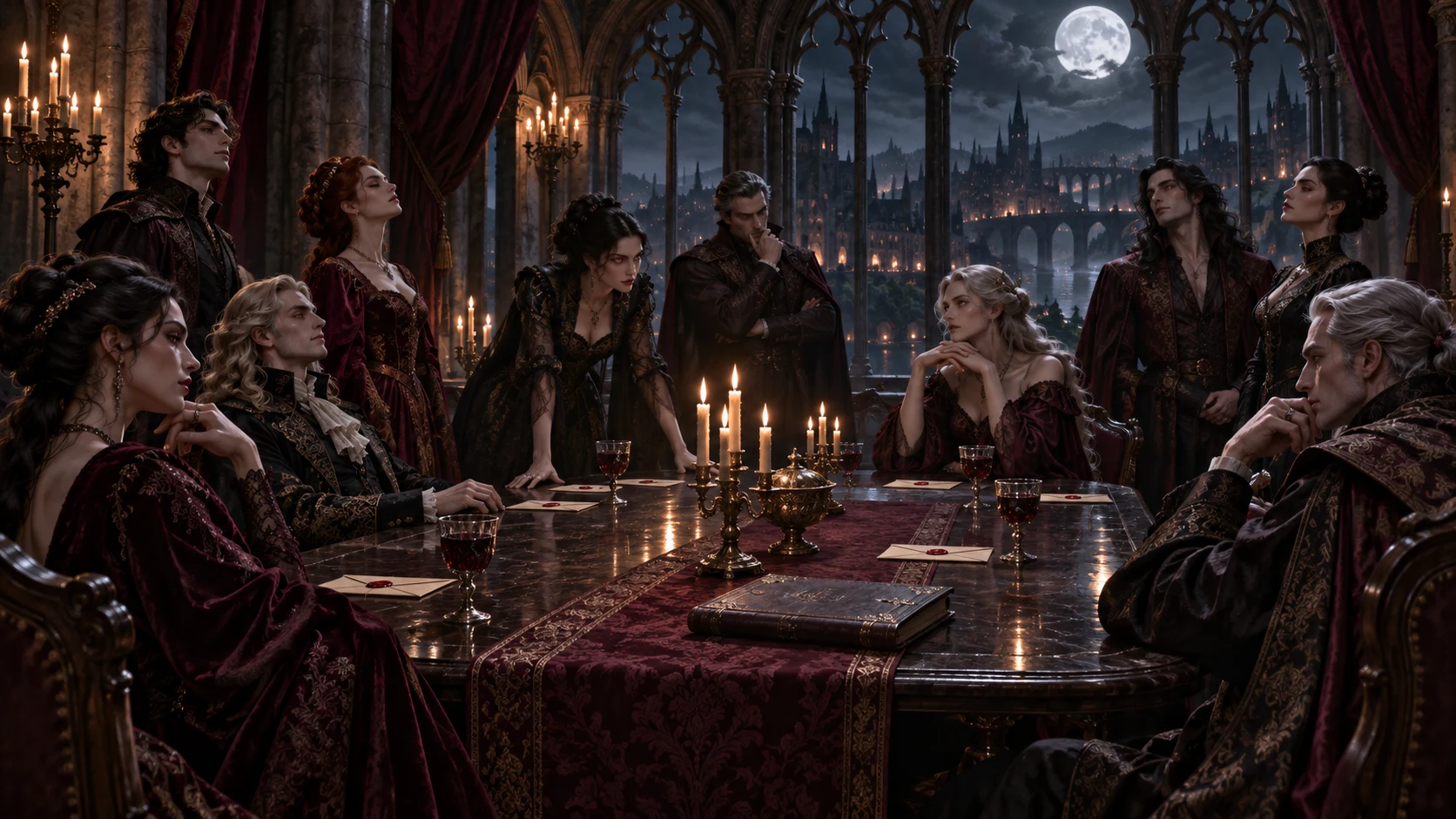
The Court of the BloodnightThe Court of the Bloodnight is a vampiric order that gathers... rules through more than fear. Its influence moves through old bloodlines, hidden agreements, servants and vassals, reaching into the shadows of cities and the lives of those who depend upon it.
It is an order built to endure. Its protection can carry a price, and a personal choice can become a challenge to the power of the Court itself.
A crown older than the Court
VampiresVampires are intelligent night predators who need blood and ... existed in TeutaryaTeutarya is the dark-fantasy music and lore universe behind ... long before the Court of the BloodnightThe Court of the Bloodnight is a vampiric order that gathers... took shape. Scattered bloodlines, small circles and loose night pacts had already established their own places in the darkness. Not every vampire belongs to the Court, and its founding was not the beginning of vampire history.
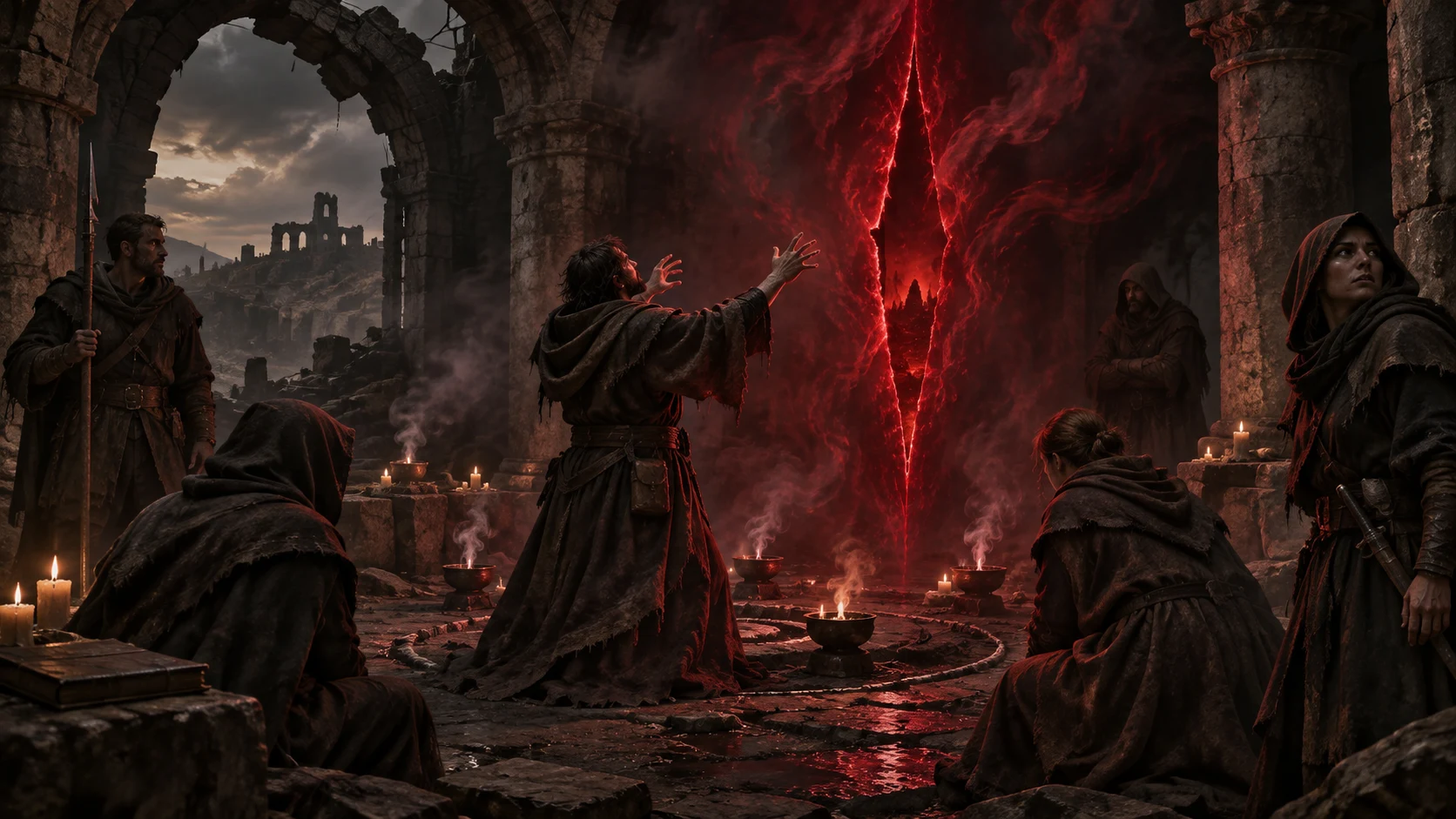
The turning point came with AlthéaAlthéa is the later Vampire Queen and a founding figure of t.... Before her transformation she was the mortal Altheya, brought to a human-led blood ritual as a sacrifice. The ritual failed: a vessel holding the ancestral blood of an ancient vampire shattered, and that blood entered her wounded arm. Altheya died as a human and rose as AlthéaAlthéa is the later Vampire Queen and a founding figure of t....
In the years that followed, old bloodlines, night pacts and dependent vassals increasingly gathered around her power. The Court formed and consolidated approximately between 830 and 850 n.d.G., in the Shadow AgeThe Shadow Age is a darker historical phase marked by crisis.... These dates are approximate; they place its rise many centuries before Serenya’s later period of power, beginning in 1701.
Power beneath the night
The Court seeks to preserve its position and keep night territories, hunting rights, bloodlines and spheres of influence within a shared order. Its power is maintained through rank and blood bonds, but also through quieter means: secret alliances, paid protection, intimidation and blackmail.
Vampire nobles lead, while enforcers, human vassals and scouts serve different roles within its networks. Information and dependency can be as valuable as open force. The Court may offer help when it suits its interests, but such help comes at a price.
The Black Register
In the chronicle of Jarek and Lady Veyra, the Black Register appears as an instrument of courtly power. It records claims, dependencies and transgressions within the Court’s order. Its precise structure and legal reach remain undefined, but its presence shows that power can be recorded and administered as well as enforced.
Veyra’s bond with Jarek, a Bloodwarden, places a personal attachment across an old divide. After the events of Velvet OathAn Oath is more than a promise in Teutarya; it can carry soc..., AlthéaAlthéa is the later Vampire Queen and a founding figure of t... holds Veyra captive. What accusation the Court may bring, and whether AlthéaAlthéa is the later Vampire Queen and a founding figure of t... knows of Jarek’s survival or the hidden blood kiss, remain open.
Those who stand against the Court
The BloodwardensBloodwardens are hunters who operate against overwhelming su... are among the Court’s traditional enemies. They hunt dangerous beings, including vampiresVampires are intelligent night predators who need blood and ..., while the Court defends its own power and its hunting grounds. Parts of the Order of the Lighttest More also oppose the Court, particularly when hunts become open threats.
Such conflicts do not make every vampire a member of the Court, nor do they turn every encounter into the same story. Teutarya’s night is larger than any single allegiance.